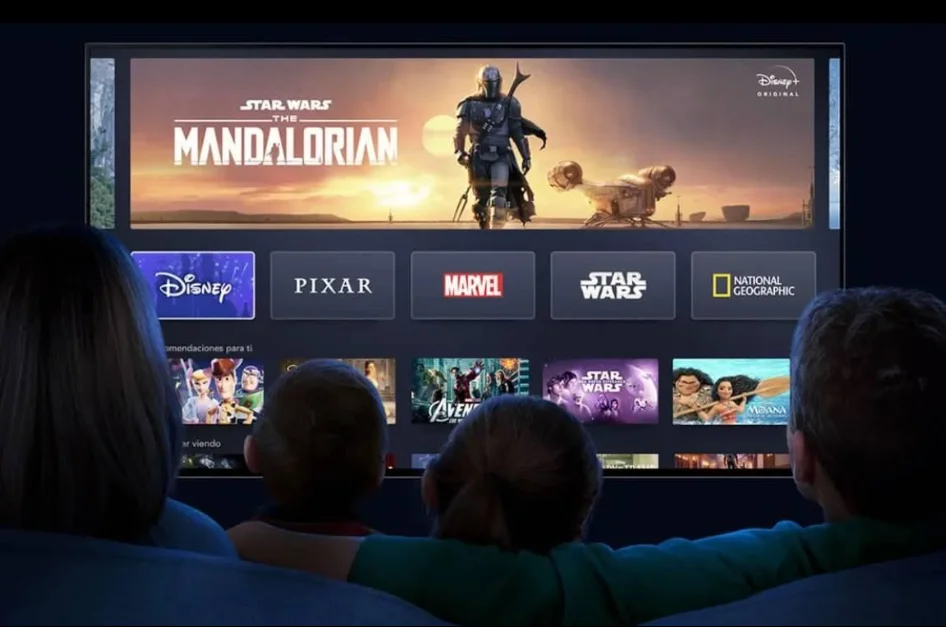
Choosing something to watch could soon feel more like having a conversation than scrolling through an endless wall of posters. Disney+ is testing an AI-powered discovery system designed to understand what viewers currently want, even when they cannot name a particular film or television series.
A subscriber could make a detailed request such as, “Show me a funny family adventure that is suitable for children and lasts less than two hours.” The system would interpret the mood, audience and viewing situation before presenting potentially suitable titles.
The experiment addresses a familiar weakness in conventional streaming recommendations. Most platforms study what a person watched in the past and use that history to predict what they may enjoy next. However, past behaviour does not always reflect a viewer’s immediate mood. Someone who regularly watches dark crime dramas, for example, may want a cheerful comedy when watching with family.
Disney+ says participants can communicate with the tool through written questions, voice commands or suggested prompts. The technology is intended to understand the meaning behind a request rather than simply matching individual keywords.
For now, the feature is only being tested with a small group of selected subscribers. Disney has not announced when or whether it will become available to the entire Disney+ audience. Feedback collected during the trial will help the company refine its recommendations, navigation and overall discovery experience.
A related AI-assisted search service is also being tested by ESPN. That system allows sports fans to ask questions conversationally and receive answers supported by statistics, videos, articles and other information from ESPN’s internal resources. Although the two experiments serve different audiences, both demonstrate Disney’s wider ambition to make its platforms easier to navigate using natural language.
Why This Matters
Streaming services now contain enormous libraries, but a larger selection does not always produce a better experience. Viewers can spend several minutes browsing without making a choice a problem sometimes described as “choice paralysis.”
If Disney’s experiment succeeds, entertainment platforms could begin competing not only through exclusive films and series, but also through how accurately they understand a viewer’s intentions. Search bars may eventually evolve into digital entertainment assistants capable of considering mood, available time, age restrictions and the people watching together.
The development also raises important questions. Viewers may want to know how their requests are stored, whether conversations influence advertising and what personal information an AI recommendation system uses. Disney has described the current programme as an early beta experiment, so its privacy controls and final design may change before any wider release.
The test represents a potentially significant shift in home entertainment. Instead of asking audiences to explore a catalogue by themselves, Disney+ is experimenting with a system that attempts to understand the viewing occasion first and then brings the catalogue to them.