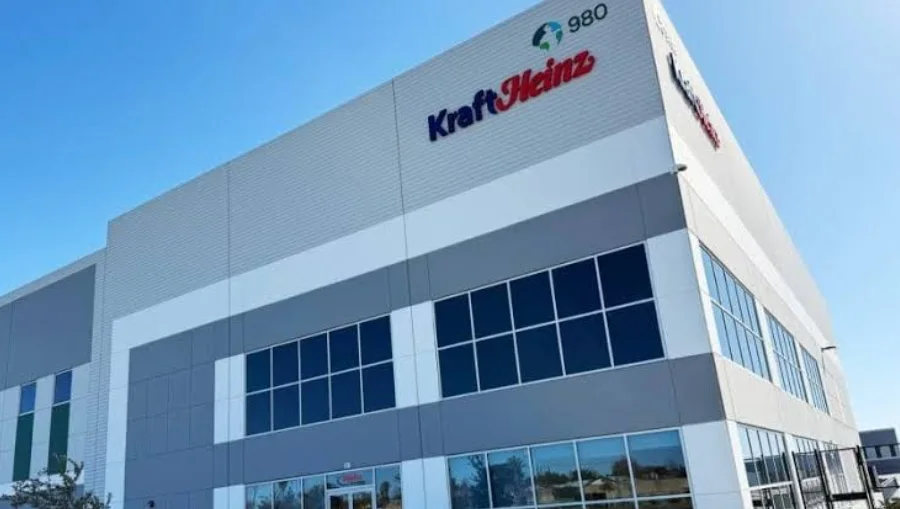
Kraft Heinz reported its second-quarter financial results on Wednesday, 5 August 2026, revealing improving sales expectations but continuing pressure on profitability and consumer demand in several established markets.
The multinational food producer recorded quarterly net sales of approximately $6.26 billion, representing a decline of 1.4% compared with the same period last year. Organic net sales, which exclude currency movements, acquisitions and divestitures, decreased by 1.3%.
Despite the reduction, the performance exceeded the company’s expectations across its American retail operations, food-service business and emerging markets. This progress encouraged Kraft Heinz to improve its sales forecast for the full financial year.
The company now expects 2026 organic net sales to decline by between 0.5% and 2%. Its previous forecast anticipated a larger reduction of between 1.5% and 3.5%.
Kraft Heinz also adjusted its expected annual earnings to between $2.03 and $2.09 per share. The earlier forecast ranged from $1.98 to $2.10 per share.
Nevertheless, the company reported an operating loss of approximately $6.4 billion. This was primarily caused by $7.4 billion in non-cash impairment charges, which reflect reductions in the accounting value of certain assets and brands. Adjusted operating income, excluding selected charges, fell by 18.4% to approximately $1.04 billion.
North American sales declined by 2.7%, partly because consumers purchased fewer meat products, spreads and other grocery items. Sales in international developed markets fell by 3.5%.
Emerging markets delivered stronger results, with sales rising by 10.4% to approximately $771 million. Organic sales in these markets increased by 8.5%, supported by a combination of higher prices and growing sales volumes.
Chief Executive Steve Cahillane said the company was seeing improved performance from its brands. Kraft Heinz plans to increase its additional investment in marketing, product innovation and business development by $100 million, bringing its total incremental investment for 2026 to approximately $700 million.
The company is directing more attention towards changing consumer preferences, including growing demand for foods with higher protein content and beverages containing electrolytes. It is also attempting to improve the performance of established brands such as Heinz, Kraft, Philadelphia, Lunchables and Primal Kitchen.
Kraft Heinz generated approximately $1.7 billion in free cash flow during the first six months of 2026, an increase of 10.3%. It also returned about $949 million to shareholders through cash dividends.
The results are significant for the global consumer-goods industry because they show how large food manufacturers are responding to inflation, changing eating habits and pressure on household spending. Although Kraft Heinz improved its annual forecast, declining sales in developed markets and the substantial impairment charges demonstrate that its turnaround remains challenging.